
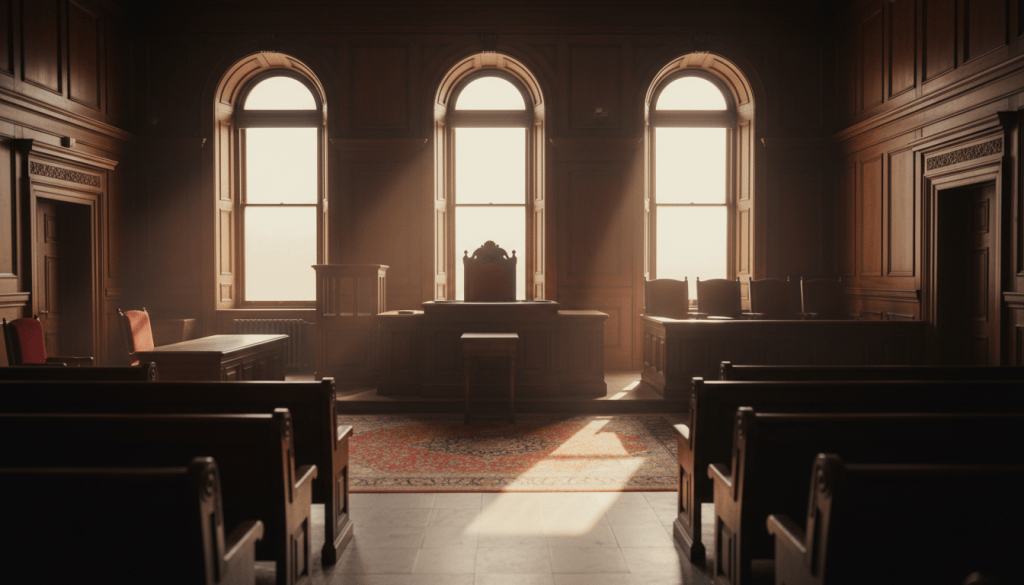
Most people who hire a criminal defense lawyer have never met one before. What they know about the job usually comes from the movies. They have watched a small-town lawyer defend an unpopular client in To Kill a Mockingbird, or a jury room argue its way to a verdict in 12 Angry Men, and those scenes are sitting somewhere in their head when they open a search for a lawyer after an arrest.
That gives defense firms a useful starting point. Courtroom films are built to make an audience trust one person in a room full of strangers, often in under two hours. The tools they use to do it, such as a clear point of view, a sympathetic main character and a story told in plain steps, translate well to a firm’s website, attorney bios and Google profile. This guide looks at what those films do well, where they mislead viewers, and how a defense firm can borrow the useful parts while staying inside the advertising rules.
What this guide covers
- Why courtroom films shape what clients expect from a defense lawyer
- Giving your firm a clear point of view
- Writing pages where the client, not the lawyer, is the main character
- Explaining the criminal process the way a good film explains a trial
- Attorney bios that read like a person and not a resume
- A consistent look and voice across your site and profiles
- Correcting the myths films leave behind, and the ethics rules on storytelling
Why courtroom films shape what clients expect
A film like Anatomy of a Murder or A Few Good Men spends most of its running time inside a courtroom, so viewers come away thinking that is where criminal cases are decided. In real life most cases end without a trial, through dismissals, diversion programs or negotiated pleas. A person calling your office may still expect a dramatic cross-examination in the first week.
You can’t change what people have watched, but you can meet those expectations early. Clients who grew up on these films want a lawyer who will stand up for them and who will be honest about where they stand. Your website is the first place they look for signs of both.
That is the real lesson for branding. The films don’t sell legal skill in the abstract. They sell a person the audience can picture in the room, and a defense firm’s marketing works best when it does the same.
Give your firm a clear point of view
The courtroom films people remember have a lawyer who believes something. The defense lawyer in To Kill a Mockingbird believes his client deserves a real defense even when the town disagrees. The jurors in 12 Angry Men are pushed to take reasonable doubt seriously. Viewers know within minutes what those characters stand for.
Many defense firm websites never say what the firm believes. They list practice areas, years of experience and a phone number, and every firm in the county looks the same. A point of view gives a visitor a reason to choose you over the next result.
Your point of view should be true and specific to how you practice. A few examples of the kind of thing that works:
- You meet every new client in person within a day of the first call
- You prepare every case as if it will go to trial, even when most settle
- You focus on one county’s courts and know its prosecutors and diversion options well
- You handle only DUI cases, or only federal cases, and nothing else
Pick the one that describes your practice, say it near the top of your home page, and repeat it in your Google Business Profile description and attorney bios. A point of view repeated in the same words everywhere becomes the thing people remember about you.
Make the client the main character
In most courtroom films the lawyer is the hero. On your website, that framing works against you. A person searching at midnight after a son’s arrest is the main character of their own story, and they are looking for a guide who understands what they are going through.
Read your home page and charge pages with that in mind. If most sentences begin with “we” or “our firm,” rewrite them so they start with the reader’s situation. Compare “Our firm has handled hundreds of DUI cases” with “If you were arrested for DUI last night, here is what happens in the next ten days.” The second version puts the reader first and gives them something useful at once. It also avoids claiming a case count you would need to document under your state’s advertising rules.
A good film also shows the stakes early. For your reader the stakes are real and specific: a license suspension, a job that requires a clean record, immigration consequences, a professional license. Naming the stakes for each charge shows that you understand what the person stands to lose.

Explain the process the way a good film explains a trial
Courtroom films keep the audience oriented. A judge explains a ruling or a lawyer walks the jury through the evidence, and the viewer always knows where the story stands.
Your clients have the same need. Most of them don’t know the difference between an arraignment and a preliminary hearing, or why a DUI arrest can lead to a separate license hearing with the motor vehicle agency. A page that lays out the steps of a criminal case in your county, in order and in plain language, does more for trust than a paragraph about your experience.
Write a short “what happens next” section for each major charge you defend. Name the first court date and what happens there. Explain release conditions or bail in your state. Say which decisions the client will need to make and roughly when. Keep it accurate for your jurisdiction and have an attorney review it, since procedure varies from state to state and county to county.
Write attorney bios that read like a character
Films tell you who a lawyer is through small details: where they came from, what they care about, how they talk to a scared client. My Cousin Vinny works partly because the lawyer is an outsider with an unusual background, and the audience roots for him because they understand him.
Most attorney bios read like a resume: law school, bar admissions, memberships, a list of practice areas. Keep those facts, because people and search engines both look for them. Then add the details that make the lawyer a person. Why did you become a defense lawyer? Did you work as a prosecutor or a public defender first? Which courts do you appear in every week? What do you tell clients at the first meeting?
Keep it honest and add a real photograph taken in your office or near the courthouse where you work. A bio that sounds like a person is easier to trust, and it gives AI assistants and Google clear facts to connect to your name.
Keep the look and voice consistent
A film has a visual style that holds from the first frame to the last. The lighting, music and pacing tell you what kind of story it is, and none of it changes halfway through.
A defense firm’s brand needs the same consistency. The logo, colors, photographs and tone of voice on your website should match your Google Business Profile, your social profiles and the directories where you are listed. When a person sees your firm in the map results, clicks through to your site and then finds you on a bar association directory, each should feel like the same firm.
Tone matters as much as color. Pick a voice that fits how you actually talk to clients, whether that is calm and reassuring or direct and plain, and use it everywhere. A site that sounds reassuring on the home page and aggressive on the DUI page reads as two different firms.
Correct the myths the films leave behind
Courtroom films compress time and favor surprises. The surprise witness, the confession on the stand and the case decided in a single dramatic afternoon make for good cinema and are rare in practice. Some clients arrive expecting that kind of turn, and they can be disappointed when their case moves slowly through continuances and negotiation.
Your content can gently fix this. An article on how long a typical misdemeanor case takes in your county, or on what a plea offer actually means, answers questions clients are already searching for. It also sets honest expectations before the first consultation, which makes later conversations easier.
You can reference a well-known film in this kind of content, as long as you discuss it in general terms. A short piece titled along the lines of “What courtroom movies get wrong about DUI cases” gives readers a familiar entry point and lets you explain the real process.

Storytelling and the advertising rules
Storytelling on a law firm website is still lawyer advertising, and the rules apply to every story you tell. ABA Model Rule 7.1 prohibits false or misleading communications about a lawyer’s services, and every state has its own version, often with added requirements.
Client stories need particular care. ABA Formal Opinion 480 (2018) reminds lawyers that the duty of confidentiality under Model Rule 1.6 covers information about a representation even when some of it is public, so get the client’s informed consent before you write about their case, or change the details enough that no one could identify them. Past results can also mislead a reader into expecting the same outcome, which is why many states require a disclaimer.
Video brings its own rules. Florida, for example, requires a clear disclaimer when an advertisement uses a dramatization of a real or fictitious event, or an actor portraying a lawyer or other professional, under Rule 4-7.13. Other states have similar provisions. Before you film a reenactment, cast actors or post a client testimonial, check your state bar’s advertising rules.
Questions about storytelling and branding for defense firms
Can I mention a famous courtroom film on my website?
Yes, discussing a film by title in general terms is common in articles and blog posts. Avoid copying scenes, dialogue or images from the film, and don’t suggest any connection between the film and your firm.
Should my website tell client stories?
Only with the client’s informed consent, or with details changed so the person can’t be identified. Even then, check your state’s rules on testimonials and past results and add any disclaimer they require.
What is the first branding change most defense firms should make?
Write down the one thing that is true about how you practice and that sets you apart, then put it near the top of your home page and in your Google Business Profile description. Most firms skip this step.
Do storytelling and branding help with SEO?
Indirectly, yes. Clear, specific pages that answer real questions tend to rank better and keep visitors reading, and consistent firm details across your site and profiles make it easier for Google and AI assistants to trust and mention your firm.
This guide is part of SBD Marketing’s series on storytelling and branding for criminal defense firms. SBD Marketing works only with criminal defense law firms, building their websites and helping them rank in Google and AI search.
SBD Marketing · info@sbdmarketing.agency · Book a call: sbdmarketing.agency/scheduling · Serving criminal defense law firms across the USA · sbdmarketing.agency


Leave a Reply